




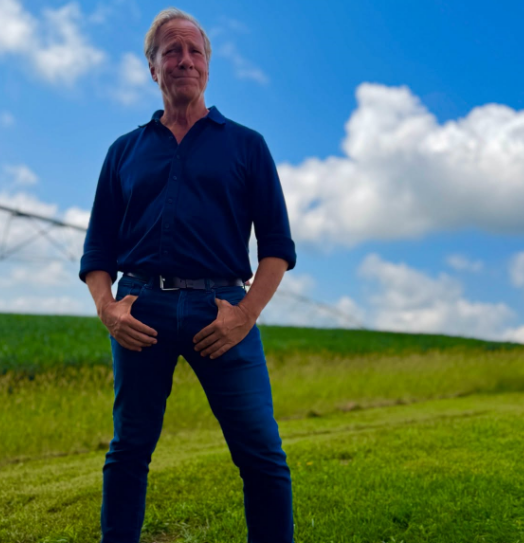
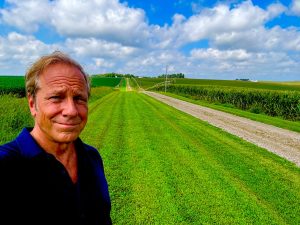
There’s something about Nebraska farmland that makes me want to stand up straight. Not sure what it is, but every time I pass through this part of the country I find myself trying to stretch my body into the sprawling landscape, and wind up looking vaguely ridiculous. In spite of all the attached images, I wasn’t in Omaha last month to be photographed – at least, not primarily. I was there as a guest of Wells Fargo, who continues to spread their money around America like a farmer, broadcasting seed into the tilth of a plowed field.
Did you know that “broadcasting” was a farming term, long before it became the name of my chosen industry? It’s true. Broadcasting was first used to describe a method of distributing seeds that don’t need to be buried deeply, like cover crops, alfalfa, and clover. It allows allows a grower to cover a massive amount of acreage much faster than you could with a precision seed drill. The drawback, is that seeds which are “broadcast” simply land on top of the dirt. Because they lack good seed-to-soil contact and are exposed to the open air, they’re vulnerable to being eaten by birds,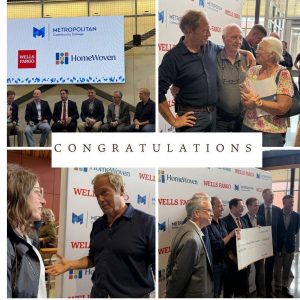 blown away by the wind, or drying out before they can germinate. To fix this, farmers will usually follow a broadcast seeder with a light harrow or roller to gently press the seeds into the soil.
 It occurs to me that my roll in Wells Fargo’s current campaign is akin to that of a seed drill. I’ve been invited to tag along in order to make sure the seeds that Wells Fargo has spread throughout Pennsylvania, Texas, Alaska, North Carolina, Wyoming, South Dakota, Iowa and Nebraska, have a better chance of taking root in the fickle field of public awareness, where every crop is competing for attention, and every farmer tills from dawn to dusk. Toward that end, I want to tell you about Metro Community College here in Omaha, and their partnership with a local charity called HomeWoven.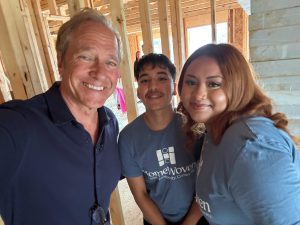
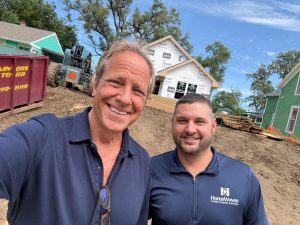
In short, students enrolled in the Construction and Building Science program at MCC are getting hands-on, real-world experience through structured internship programs managed by a local non-profit called HomeWoven. I’ve met these students, and they’re awesome. Currently, they’re applying their classroom training directly to local construction projects, physically building affordable homes in South Omaha. While HomeWoven addresses neighborhood housing stability, MCC fulfills the essential demand by supplying the skilled workforce required to execute each project. My job was to once again shake hands with the local politicians, (Senator Ricketts, in this case) meet the key people involved, talk to the local media about the importance of reinvigorating the skilled trades, and present a large check on behalf of Wells Fargo – in this 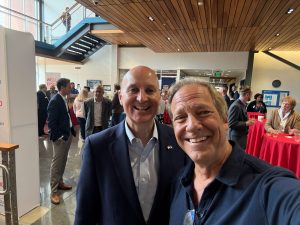 case, a $1.25 million investment for a local solution that’s actually working. Pretty great gig.
Honestly, I don’t know where I’d be today, but for a few great teachers at Essex Community College way back in 1980. They straightened me out, showed me a way forward, and gave me the confidence to try things I never imagined I might be good at. MCC is doing the same thing for a lot of kids entering the skilled trades, and their partnership with HomeWoven is working. Lots of families who could otherwise never afford a new home, are now in one, thanks to a construction program at a local community college, a local non-profit that’s connecting the dots, and a big national bank that’s investing in the towns where they do business.
 Seems to me, that’s a story worth broadcasting, and a seed worth drilling down on…
Mike’s Facebook Page